Hello, Creative Vata!
You’ve got that magical Vata spark: light, creative, and full of ideas. This quiz says you naturally lean toward Vata, the energy of movement and change.

-
Vata is made of space and air. Vata types are imaginative, talkative, expressive, and quick to learn.
Those with strong Vata energy often move through the world with curiosity and imagination. You may find yourself drawn to the spiritual, the artistic, or the unconventional—naturally exploring new perspectives, asking deeper questions, and seeing connections others might miss.
Vata types tend to be expressive, talkative, and quick to learn, with minds that move just as quickly as the wind itself. This can bring bursts of inspiration and insight, but it can also lead to scattered thoughts or difficulty staying grounded when there is too much stimulation.
In the body, Vata is light, dry, and cool. You may notice that you feel cold more easily, your energy comes in waves, or your system responds quickly to changes in routine, environment, or stress.
At its best, Vata brings creativity, intuition, and a deep sense of connection to possibility. When out of balance, it can feel like too much movement, leading to restlessness, anxiety, or a sense of being ungrounded.
-
When Vata is in harmony, you feel like the wind in your sails: light, lifted, and full of possibility. Creativity flows with ease, and your thoughts dance like candlelight: quick, bright, and beautiful. You may find yourself dreaming new ideas, speaking with eloquence, or embracing change without fear.
Your energy is dynamic but not chaotic. You feel alive, but not overstimulated. There is movement, but also rhythm. You feel free to express yourself, through words, art, music, dance, or ideas, without losing touch with your body or breath.
Your digestion feels steady, your sleep is restful, and your mind feels inspired rather than scattered.
You might notice:
Bursts of creative inspiration
Clear, insightful communication
A desire for artistic or expressive outlets
Joy in spontaneous experiences
Lightness in body and spirit
Curiosity and openness to change
Gentle enthusiasm and a sense of wonder
Regular elimination and digestion
Restful sleep with vivid, uplifting dreams
A feeling of being attuned to the unseen or subtle

-
When Vata becomes excessive or disturbed, it can feel like being caught in a windstorm, thoughts swirling, energy scattered, and grounding hard to find. You might feel anxious, restless, or unable to slow down. There may be a sense of lightness, not in the uplifting way, but in the way a leaf feels when it's being blown around without direction.
Your routines may become irregular, your appetite inconsistent, and your sleep easily disrupted. You might start many things but struggle to finish them. In your body, dryness, coldness, and tension can show up, especially in the skin, joints, and digestion.
It’s not that something is wrong with you, it’s just that Vata has taken the reins, and your system is asking gently (or not-so-gently) to slow down, root in, and restore steadiness.
You might experience:
Racing or looping thoughts
Anxiety or fear without a clear cause
Insomnia or light, disturbed sleep
Cold hands and feet
Dry skin, hair, or lips
Bloating or irregular digestion
Feeling easily overwhelmed
Difficulty focusing or following through
Sensitivity to noise or stimulation

-
If you’re Vata dominant, or feeling the effects of Vata imbalance, grounding practices are your lifeline. You don’t need to force stillness or suppress your sparkle. Instead, think of it as creating a container where your energy can flow without spilling. You’re not dimming your light, you’re anchoring it.
Daily Rituals for Grounding Vata:
Wake and sleep at consistent times. Vata loves rhythm. Try to rise and sleep with the sun.
Begin your day with warm oil massage (Abhyanga). Use sesame oil to nourish the skin, calm the nerves, and gently wake up your body.
Eat warm, cooked meals at regular intervals. Think soups, stews, root vegetables, and digestive herbs like ginger and cumin. Flavors that decrease Vata are sweet, sour, and salty while bitter, pungent, and astringent increase Vata.
Limit screen time and multitasking. Your mind needs spaciousness, not overstimulation.
Cozy up with weighted blankets, socks, and warm drinks. Vata responds deeply to comfort.
Ground through the senses. Listen to calming music, use soft textures, and light a subtle, earthy incense such as sandalwood.
Practice breathwork or gentle yoga. Alternate nostril breathing, slow flows, and long-held restorative poses all bring balance to airy energy.
Take slow walks in nature. Especially among trees, near water, or anywhere you can feel your feet on the earth.
Repeat grounding affirmations: I am safe. I am supported. I am enough, just as I am.
Click here!


Download your free Mini Workbook or explore the Full Edition of Breaking the Cycle, designed to help you notice patterns and build habits that nourish your unique energy. Just click the pic to visit the shop!
Vata Food Chart
There are no “good” or “bad” foods in Ayurveda. Instead, we tune into how each food’s natural qualities interact with your unique constitution. Vata is the dosha of movement, dry, light, cool, and quick by nature, so it’s easily thrown off by foods that share those same qualities.
This chart isn’t about strict rules, it’s about support. It’s here to help you recognize what nourishes your system, so you can calm the wind, ground your energy, and feel more steady and at ease.
What the Chart Shows:
Effect on Vata: This column shows whether a food is likely to increase or decrease the Vata dosha.
If you’re feeling anxious, scattered, constipated, chilly, or overwhelmed, Vata may be elevated.
Foods that decrease Vata are typically warm, moist, oily, and grounding, helping to bring stability and comfort to the body and mind.
Foods that increase Vata are often cold, dry, light, or rough, sometimes helpful when you feel sluggish, but potentially aggravating when Vata is high.
Mental Gunas
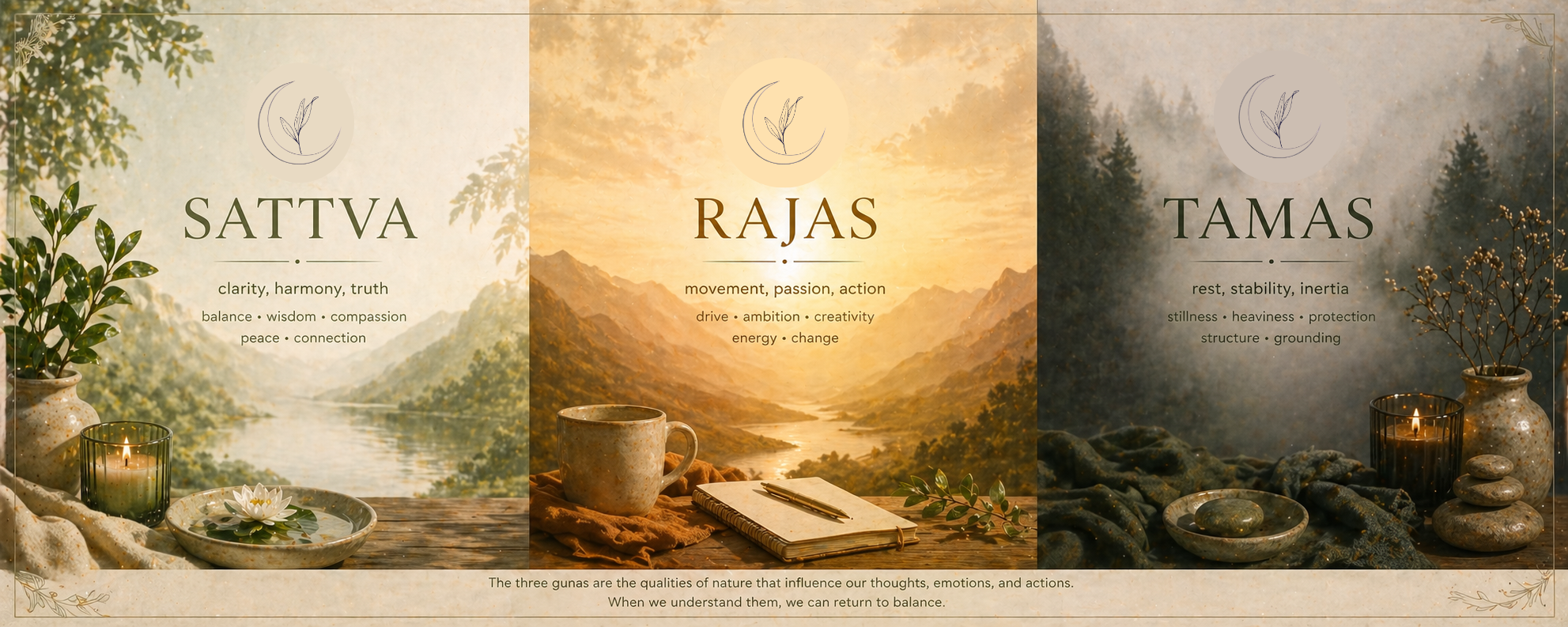
Guna (pronounced goo-nuh) means “quality.” In Ayurveda, the three mental gunas reflect our patterns of thought, feeling, and response:
-
The energy of peace, harmony, and clarity. Sattvic foods help Vata find steadiness and calm. Think: warm milk, stewed fruits, ghee, basmati rice, and softly spiced dishes.
-
The energy of activity and stimulation. Rajasic foods can excite the nervous system, which, for Vata, is already sensitive. Too much can lead to anxiety or overthinking. Think: caffeine, garlic, chili, and overly crunchy foods.
-
The energy of stillness, rest, and inertia. A little tamas can help settle the windiness of Vata, but too much may lead to lethargy or emotional heaviness. Think: fried foods, processed meals, and leftovers.
These are not rules to follow but insights to explore. Vata thrives not through rigidity, but through rhythm and compassion. The goal is to nourish your nature, not override it.
Foods for Vata
-
Apple, ripe
Effect on Vata: Increase
Mental Gunas: Sattvic
Insights: Sweet taste soothes and nourishes Vata. Sour taste supports digestion and moistens dryness. Astringent taste is drying and can aggravate Vata unless softened. Cooling energy may worsen Vata’s coldness. Light or drying effects can unground Vata. Best when ripe, in season, and eaten at room temperature or stewed with spices.
Apple, unripe
Effect on Vata: Increase
Mental Gunas: Sattvic
Insights: Sour taste supports digestion and moistens dryness. Astringent taste is drying and can aggravate Vata unless softened. Cooling energy may worsen Vata’s coldness. Light or drying effects can unground Vata. Best when ripe, in season, and eaten at room temperature or stewed with spices.
Apricots
Effect on Vata: Decrease
Mental Gunas: Sattvic
Insights: Sweet taste soothes and nourishes Vata. Warming potency balances Vata’s cold nature. Heavy or moist qualities help stabilize and calm. Best when ripe, in season, and eaten at room temperature or stewed with spices.
Avocado
Effect on Vata: Decrease
Mental Gunas: Tamasic
Insights: Astringent taste is drying and can aggravate Vata unless softened. Cooling energy may worsen Vata’s coldness. Heavy or moist qualities help stabilize and calm. Best when ripe, in season, and eaten at room temperature or stewed with spices.
Berries, sour
Effect on Vata: Decrease
Mental Gunas: Rajasic
Insights: Sour taste supports digestion and moistens dryness. Warming potency balances Vata’s cold nature. Light or drying effects can unground Vata. Best when ripe, in season, and eaten at room temperature or stewed with spices.
Berries, sweet
Effect on Vata: Decrease
Mental Gunas: Sattvic
Insights: Sweet taste soothes and nourishes Vata. Cooling energy may worsen Vata’s coldness. Heavy or moist qualities help stabilize and calm. Best when ripe, in season, and eaten at room temperature or stewed with spices.
Banana, green
Effect on Vata: Increase
Mental Gunas: Rajasic
Insights: Astringent taste is drying and can aggravate Vata unless softened. Cooling energy may worsen Vata’s coldness. Light or drying effects can unground Vata. Best when ripe, in season, and eaten at room temperature or stewed with spices.
Banana, ripe
Effect on Vata: Decrease
Mental Gunas: Sattvic
Insights: Sweet taste soothes and nourishes Vata. Warming potency balances Vata’s cold nature. Heavy or moist qualities help stabilize and calm. Best when ripe, in season, and eaten at room temperature or stewed with spices.
Cantaloupe
Effect on Vata: Decrease
Mental Gunas: Sattvic
Insights: Sweet taste soothes and nourishes Vata. Warming potency balances Vata’s cold nature. Heavy or moist qualities help stabilize and calm. Best when ripe, in season, and eaten at room temperature or stewed with spices.
Cherries
Effect on Vata: Decrease
Mental Gunas: Sattvic
Insights: Sweet taste soothes and nourishes Vata. Sour taste supports digestion and moistens dryness. Astringent taste is drying and can aggravate Vata unless softened. Warming potency balances Vata’s cold nature. Light or drying effects can unground Vata. Best when ripe, in season, and eaten at room temperature or stewed with spices.
Coconut
Effect on Vata: Decrease
Mental Gunas: Sattvic
Insights: Sweet taste soothes and nourishes Vata. Cooling energy may worsen Vata’s coldness. Best when ripe, in season, and eaten at room temperature or stewed with spices.
Cranberries
Effect on Vata: Increase
Mental Gunas: Sattvic
Insights: Sour taste supports digestion and moistens dryness. Astringent taste is drying and can aggravate Vata unless softened. Warming potency balances Vata’s cold nature. Light or drying effects can unground Vata. Best when ripe, in season, and eaten at room temperature or stewed with spices.
Dates
Effect on Vata: Decrease
Mental Gunas: Sattvic
Insights: Sweet taste soothes and nourishes Vata. Cooling energy may worsen Vata’s coldness. Heavy or moist qualities help stabilize and calm. Best when ripe, in season, and eaten at room temperature or stewed with spices.
Figs
Effect on Vata: Decrease
Mental Gunas: Sattvic
Insights: Sweet taste soothes and nourishes Vata. Cooling energy may worsen Vata’s coldness. Heavy or moist qualities help stabilize and calm. Best when ripe, in season, and eaten at room temperature or stewed with spices.
Grapes, green
Effect on Vata: Decrease
Mental Gunas: Sattvic
Insights: Sweet taste soothes and nourishes Vata. Sour taste supports digestion and moistens dryness. Warming potency balances Vata’s cold nature. Best when ripe, in season, and eaten at room temperature or stewed with spices.
Grapes, red, purple, black
Effect on Vata: Decrease
Mental Gunas: Sattvic
Insights: Sweet taste soothes and nourishes Vata. Sour taste supports digestion and moistens dryness. Astringent taste is drying andcan aggravate Vata unless softened. Cooling energy may worsen Vata’s coldness. Best when ripe, in season, and eaten at room temperature or stewed with spices.
Grapefruit
Effect on Vata: Decrease
Mental Gunas: Tamasic
Insights: Sour taste supports digestion and moistens dryness. Warming potency balances Vata’s cold nature. Best when ripe, in season, and eaten at room temperature or stewed with spices.
Kiwi
Effect on Vata: Decrease
Mental Gunas: Rajasic
Insights: Sweet taste soothes and nourishes Vata. Cooling energy may worsen Vata’s coldness. Best when ripe, in season, and eaten at room temperature or stewed with spices.
Lemon
Effect on Vata: Decrease
Mental Gunas: Rajasic
Insights: Sour taste supports digestion and moistens dryness. Warming potency balances Vata’s cold nature. Best when ripe, in season, and eaten at room temperature or stewed with spices.
Lime
Effect on Vata: Decrease
Mental Gunas: Rajasic
Insights: Sour taste supports digestion and moistens dryness. Cooling energy may worsen Vata’s coldness. Best when ripe, in season, and eaten at room temperature or stewed with spices.
Mango, unripe
Effect on Vata: Balance
Mental Gunas: Rajasic
Insights: Sour taste supports digestion and moistens dryness. Astringent taste is drying and can aggravate Vata unless softened. Cooling energy may worsen Vata’s coldness. Heavy or moist qualities help stabilize and calm. Best when ripe, in season, and eaten at room temperature or stewed with spices.
Mango, ripe
Effect on Vata: Decrease
Mental Gunas: Sattvic
Insights: Sweet taste soothes and nourishes Vata. Warming potency balances Vata’s cold nature. Best when ripe, in season, and eaten at room temperature or stewed with spices.
Melons
Effect on Vata: Decrease
Mental Gunas: Sattvic
Insights: Sweet taste soothes and nourishes Vata. Cooling energy may worsen Vata’s coldness. Heavy or moist qualities help stabilize and calm. Best when ripe, in season, and eaten at room temperature or stewed with spices.
Oranges, sweet
Effect on Vata: Decrease
Mental Gunas: Sattvic
Insights: Sweet taste soothes and nourishes Vata. Astringent taste is drying and can aggravate Vata unless softened. Warming potency balances Vata’s cold nature. Heavy or moist qualities help stabilize and calm. Best when ripe, in season, and eaten at room temperature or stewed with spices.
Papaya
Effect on Vata: Decrease
Mental Gunas: Sattvic
Insights: Sweet taste soothes and nourishes Vata. Sour taste supports digestion and moistens dryness. Warming potency balances Vata’s cold nature. Heavy or moist qualities help stabilize and calm. Best when ripe, in season, and eaten at room temperature or stewed with spices.
Peaches
Effect on Vata: Decrease
Mental Gunas: Sattvic
Insights: Sweet taste soothes and nourishes Vata. Sour taste supports digestion and moistens dryness. Astringent taste is drying and can aggravate Vata unless softened. Warming potency balances Vata’s cold nature. Heavy or moist qualities help stabilize and calm. Best when ripe, in season, and eaten at room temperature or stewed with spices.
Pears
Effect on Vata: Increase
Mental Gunas: Sattvic
Insights: Sweet taste soothes and nourishes Vata. Astringent taste is drying and can aggravate Vata unless softened. Cooling energy may worsen Vata’s coldness. Light or drying effects can unground Vata. Heavy or moist qualities help stabilize and calm. Best when ripe, in season, and eaten at room temperature or stewed with spices.
Persimmon
Effect on Vata: Increase
Mental Gunas: Sattvic
Insights: Sour taste supports digestion and moistens dryness. Astringent taste is drying and can aggravate Vata unless softened. Warming potency balances Vata’s cold nature. Light or drying effects can unground Vata. Best when ripe, in season, and eaten at room temperature or stewed with spices.
Pineapple
Effect on Vata: Decrease
Mental Gunas: Sattvic
Insights: Sweet taste soothes and nourishes Vata. Sour taste supports digestion and moistens dryness. Warming potency balances Vata’s cold nature. Heavy or moist qualities help stabilize and calm. Best when ripe, in season, and eaten at room temperature or stewed with spices.
Plums
Effect on Vata: Decrease
Mental Gunas: Sattvic
Insights: Sweet taste soothes and nourishes Vata. Sour taste supports digestion and moistens dryness. Astringent taste is drying and can aggravate Vata unless softened. Warming potency balances Vata’s cold nature. Heavy or moist qualities help stabilize and calm. Best when ripe, in season, and eaten at room temperature or stewed with spices.
Pomegranate
Effect on Vata: Increase
Mental Gunas: Sattvic
Insights: Sweet taste soothes and nourishes Vata. Sour taste supports digestion and moistens dryness. Astringent taste is drying and can aggravate Vata unless softened. Cooling energy may worsen Vata’s coldness. Best when ripe, in season, and eaten at room temperature or stewed with spices.
Prunes, soaked
Effect on Vata: Decrease
Mental Gunas: Sattvic
Insights: Sweet taste soothes and nourishes Vata. Cooling energy may worsen Vata’s coldness. Best when ripe, in season, and eaten at room temperature or stewed with spices.
Raisins, soaked
Effect on Vata: Decrease
Mental Gunas: Sattvic
Insights: Sweet taste soothes and nourishes Vata. Sour taste supports digestion and moistens dryness. Cooling energy may worsen Vata’s coldness. Best when ripe, in season, and eaten at room temperature or stewed with spices.
Raisins, unsoaked
Effect on Vata: Increase
Mental Gunas: Sattvic
Insights: Sweet taste soothes and nourishes Vata. Cooling energy may worsen Vata’s coldness. Heavy or moist qualities help stabilize and calm. Best when ripe, in season, and eaten at room temperature or stewed with spices.
Raspberries
Effect on Vata: Increase
Mental Gunas: Sattvic
Insights: Sweet taste soothes and nourishes Vata. Sour taste supports digestion and moistens dryness. Astringent taste is drying and can aggravate Vata unless softened. Cooling energy may worsen Vata’s coldness. Best when ripe, in season, and eaten at room temperature or stewed with spices.
Strawberries
Effect on Vata: Increase
Mental Gunas: Sattvic
Insights: Sweet taste soothes and nourishes Vata. Sour taste supports digestion and moistens dryness. Astringent taste is drying and can aggravate Vata unless softened. Cooling energy may worsen Vata’s coldness. Best when ripe, in season, and eaten at room temperature or stewed with spices.
Tamarind
Effect on Vata: Decrease
Mental Gunas: Rajasic
Insights: Sour taste supports digestion and moistens dryness. Warming potency balances Vata’s cold nature. Best when ripe, in season, and eaten at room temperature or stewed with spices.
Watermelon
Effect on Vata: Increase
Mental Gunas: Sattvic
Insights: Sweet taste soothes and nourishes Vata. Cooling energy may worsen Vata’s coldness. Heavy or moist qualities help stabilize and calm. Best when ripe, in season, and eaten at room temperature or stewed with spices.
-
Artichoke
Effect on Vata: Increase
Mental Gunas: Sattvic
Insights: Tends to be dry or light and can aggravate Vata if eaten raw. Sweet taste is nourishing and grounding for Vata. Warming potency helps balance Vata’s natural chill. Best when cooked with ghee and warming spices.
Artichoke, Jerusalem
Effect on Vata: Increase
Mental Gunas: Sattvic
Insights: Tends to be dry or light and can aggravate Vata if eaten raw. Cooling energy may worsen Vata’s cold nature unless well-cooked. Rough or drying texture can irritate Vata digestion. Light foods may increase Vata’s mobility unless softened. Best when cooked with ghee and warming spices.
Asparagus
Effect on Vata: Decrease
Mental Gunas: Sattvic
Insights: Tends to be dry or light and can aggravate Vata if eaten raw. Sweet taste is nourishing and grounding for Vata. Cooling energy may worsen Vata’s cold nature unless well-cooked. Best when cooked with ghee and warming spices.
Beets
Effect on Vata: Decrease
Mental Gunas: Sattvic
Insights: Tends to be dry or light and can aggravate Vata if eaten raw. Sweet taste is nourishing and grounding for Vata. Cooling energy may worsen Vata’s cold nature unless well-cooked. Best when cooked with ghee and warming spices.
Beet Greens
Effect on Vata: Increase
Mental Gunas: Sattvic
Insights: Tends to be dry or light and can aggravate Vata if eaten raw. Sweet taste is nourishing and grounding for Vata. Cooling energy may worsen Vata’s cold nature unless well-cooked. Best when cooked with ghee and warming spices.
Bitter Melon
Effect on Vata: Increase
Mental Gunas: Sattvic
Insights: Tends to be dry or light and can aggravate Vata if eaten raw. Cooling energy may worsen Vata’s cold nature unless well-cooked. Best when cooked with ghee and warming spices.
Broccoli
Effect on Vata: Increase
Mental Gunas: Sattvic
Insights: Tends to be dry or light and can aggravate Vata if eaten raw. Cooling energy may worsen Vata’s cold nature unless well-cooked. Rough or drying texture can irritate Vata digestion. Best when cooked with ghee and warming spices.
Brussel Sprouts
Effect on Vata: Increase
Mental Gunas: Sattvic
Insights: Tends to be dry or light and can aggravate Vata if eaten raw. Warming potency helps balance Vata’s natural chill. Light foods may increase Vata’s mobility unless softened. Best when cooked with ghee and warming spices.
Burdock Root
Effect on Vata: Increase
Mental Gunas: Sattvic
Insights: Tends to be dry or light and can aggravate Vata if eaten raw. Warming potency helps balance Vata’s natural chill. Light foods may increase Vata’s mobility unless softened. Best when cooked with ghee and warming spices.
Cabbage
Effect on Vata: Increase
Mental Gunas: Sattvic
Insights: Tends to be dry or light and can aggravate Vata if eaten raw. Cooling energy may worsen Vata’s cold nature unless well-cooked. Rough or drying texture can irritate Vata digestion. Best when cooked with ghee and warming spices.
Carrot, raw
Effect on Vata: Increase
Mental Gunas: Sattvic
Insights: Tends to be dry or light and can aggravate Vata if eaten raw. Warming potency helps balance Vata’s natural chill. Rough or drying texture can irritate Vata digestion. Best when cooked with ghee and warming spices.
Carrot, cooked
Effect on Vata: Decrease
Mental Gunas: Sattvic
Insights: Sweet taste is nourishing and grounding for Vata. Warming potency helps balance Vata’s natural chill. Light foods may increase Vata’s mobility unless softened. Best when cooked with ghee and warming spices.
Cauliflower
Effect on Vata: Increase
Mental Gunas: Sattvic
Insights: Tends to be dry or light and can aggravate Vata if eaten raw. Cooling energy may worsen Vata’s cold nature unless well-cooked. Rough or drying texture can irritate Vata digestion. Best when cooked with ghee and warming spices.
Celery
Effect on Vata: Increase
Mental Gunas: Sattvic
Insights: Tends to be dry or light and can aggravate Vata if eaten raw. Cooling energy may worsen Vata’s cold nature unless well-cooked. Rough or drying texture can irritate Vata digestion. Light foods may increase Vata’s mobility unless softened. Best when cooked with ghee and warming spices.
Chilies
Effect on Vata: Decrease
Mental Gunas: Rajasic
Insights: Warming potency helps balance Vata’s natural chill. Best when cooked with ghee and warming spices.
Cilantro
Effect on Vata: Decrease
Mental Gunas: Sattvic
Insights: Tends to be dry or light and can aggravate Vata if eaten raw. Sweet taste is nourishing and grounding for Vata. Cooling energy may worsen Vata’s cold nature unless well-cooked. Best when cooked with ghee and warming spices.
Corn, fresh
Effect on Vata: Increase
Mental Gunas: Sattvic
Insights: Tends to be dry or light and can aggravate Vata if eaten raw. Sweet taste is nourishing and grounding for Vata. Warming potency helps balance Vata’s natural chill. Rough or drying texture can irritate Vata digestion. Light foods may increase Vata’s mobility unless softened. Best when cooked with ghee and warming spices.
Cucumber
Effect on Vata: Decrease
Mental Gunas: Sattvic
Insights: Sweet taste is nourishing and grounding for Vata. Cooling energy may worsen Vata’s cold nature unless well-cooked. Best when cooked with ghee and warming spices.
Dandelion Greens
Effect on Vata: Increase
Mental Gunas: Sattvic
Insights: Tends to be dry or light and can aggravate Vata if eaten raw. Warming potency helps balance Vata’s natural chill. Best when cooked with ghee and warming spices.
Eggplant
Effect on Vata: Increase
Mental Gunas: Rajasic
Insights: Tends to be dry or light and can aggravate Vata if eaten raw. Warming potency helps balance Vata’s natural chill. Heavy or moist qualities calm and stabilize Vata. Best when cooked with ghee and warming spices.
Fennel, fresh
Effect on Vata: Decrease
Mental Gunas: Sattvic
Insights: Sweet taste is nourishing and grounding for Vata. Cooling energy may worsen Vata’s cold nature unless well-cooked. Best when cooked with ghee and warming spices.
Green Beans
Effect on Vata: Decrease
Mental Gunas: Sattvic
Insights: Tends to be dry or light and can aggravate Vata if eaten raw. Sweet taste is nourishing and grounding for Vata. Cooling energy may worsen Vata’s cold nature unless well-cooked. Light foods may increase Vata’s mobility unless softened. Best when cooked with ghee and warming spices.
Kale
Effect on Vata: Increase
Mental Gunas: Sattvic
Insights: Tends to be dry or light and can aggravate Vata if eaten raw. Cooling energy may worsen Vata’s cold nature unless well-cooked. Rough or drying texture can irritate Vata digestion. Best when cooked with ghee and warming spices.
Kohlrabi
Effect on Vata: Increase
Mental Gunas: Sattvic
Insights: Tends to be dry or light and can aggravate Vata if eaten raw. Warming potency helps balance Vata’s natural chill. Light foods may increase Vata’s mobility unless softened. Best when cooked with ghee and warming spices.
Leeks, cooked
Effect on Vata: Decrease
Mental Gunas: Tamasic
Insights: Sweet taste is nourishing and grounding for Vata. Warming potency helps balance Vata’s natural chill. Best when cooked with ghee and warming spices.
Lettuce
Effect on Vata: Increase
Mental Gunas: Sattvic
Insights: Tends to be dry or light and can aggravate Vata if eaten raw. Cooling energy may worsen Vata’s cold nature unless well-cooked. Rough or drying texture can irritate Vata digestion. Light foods may increase Vata’s mobility unless softened. Best when cooked with ghee and warming spices.
Mushrooms
Effect on Vata: Increase
Mental Gunas: Tamasic
Insights: Tends to be dry or light and can aggravate Vata if eaten raw. Sweet taste is nourishing and grounding for Vata. Warming potency helps balance Vata’s natural chill. Rough or drying texture can irritate Vata digestion. Heavy or moist qualities calm and stabilize Vata. Best when cooked with ghee and warming spices.
Mustard Greens
Effect on Vata: Decrease
Mental Gunas: Sattvic
Insights: Warming potency helps balance Vata’s natural chill. Heavy or moist qualities calm and stabilize Vata. Best when cooked with ghee and warming spices.
Okra
Effect on Vata: Decrease
Mental Gunas: Sattvic
Insights: Tends to be dry or light and can aggravate Vata if eaten raw. Sweet taste is nourishing and grounding for Vata. Cooling energy may worsen Vata’s cold nature unless well-cooked. Rough or drying texture can irritate Vata digestion. Best when cooked with ghee and warming spices.
Olives, black
Effect on Vata: Decrease
Mental Gunas: Rajasic
Insights: Sweet taste is nourishing and grounding for Vata. Warming potency helps balance Vata’s natural chill. Heavy or moist qualities calm and stabilize Vata. Best when cooked with ghee and warming spices.
Onion, cooked
Effect on Vata: Decrease
Mental Gunas: Rajasic
Insights: Sweet taste is nourishing and grounding for Vata. Warming potency helps balance Vata’s natural chill. Best when cooked with ghee and warming spices.
Onion, raw
Effect on Vata: Increase
Mental Gunas: Rajasic
Insights: Warming potency helps balance Vata’s natural chill. Heavy or moist qualities calm and stabilize Vata. Best when cooked with ghee and warming spices.
Parsnip
Effect on Vata: Decrease
Mental Gunas: Sattvic
Insights: Tends to be dry or light and can aggravate Vata if eaten raw. Sweet taste is nourishing and grounding for Vata. Cooling energy may worsen Vata’s cold nature unless well-cooked. Heavy or moist qualities calm and stabilize Vata. Best when cooked with ghee and warming spices.
Peas, sweet
Effect on Vata: Decrease
Mental Gunas: Sattvic
Insights: Sweet taste is nourishing and grounding for Vata. Cooling energy may worsen Vata’s cold nature unless well-cooked. Heavy or moist qualities calm and stabilize Vata. Best when cooked with ghee and warming spices.
Peppers, bell
Effect on Vata: Increase
Mental Gunas: Rajasic
Insights: Tends to be dry or light and can aggravate Vata if eaten raw. Sweet taste is nourishing and grounding for Vata. Warming potency helps balance Vata’s natural chill. Rough or drying texture can irritate Vata digestion. Light foods may increase Vata’s mobility unless softened. Best when cooked with ghee and warming spices.
Potato, sweet
Effect on Vata: Decrease
Mental Gunas: Sattvic
Insights: Sweet taste is nourishing and grounding for Vata. Cooling energy may worsen Vata’s cold nature unless well-cooked. Heavy or moist qualities calm and stabilize Vata. Best when cooked with ghee and warming spices.
Potato, white
Effect on Vata: Increase
Mental Gunas: Sattvic
Insights: Tends to be dry or light and can aggravate Vata if eaten raw. Cooling energy may worsen Vata’s cold nature unless well-cooked. Rough or drying texture can irritate Vata digestion. Light foods may increase Vata’s mobility unless softened. Best when cooked with ghee and warming spices.
Radish
Effect on Vata: Increase
Mental Gunas: Rajasic
Insights: Warming potency helps balance Vata’s natural chill. Rough or drying texture can irritate Vata digestion. Best when cooked with ghee and warming spices.
Rutabaga
Effect on Vata: Decrease
Mental Gunas: Sattvic
Insights: Tends to be dry or light and can aggravate Vata if eaten raw. Sweet taste is nourishing and grounding for Vata. Cooling energy may worsen Vata’s cold nature unless well-cooked. Heavy or moist qualities calm and stabilize Vata. Best when cooked with ghee and warming spices.
Spinach, raw
Effect on Vata: Decrease
Mental Gunas: Sattvic
Insights: Tends to be dry or light and can aggravate Vata if eaten raw. Cooling energy may worsen Vata’s cold nature unless well-cooked. Rough or drying texture can irritate Vata digestion. Light foods may increase Vata’s mobility unless softened. Best when cooked with ghee and warming spices.
Spinach, cooked
Effect on Vata: Decrease
Mental Gunas: Sattvic
Insights: Tends to be dry or light and can aggravate Vata if eaten raw. Warming potency helps balance Vata’s natural chill. Heavy or moist qualities calm and stabilize Vata. Best when cooked with ghee and warming spices.
Spirulina, sea vegetable
Effect on Vata: Increase
Mental Gunas: Sattvic
Insights: Tends to be dry or light and can aggravate Vata if eaten raw. Sweet taste is nourishing and grounding for Vata. Cooling energy may worsen Vata’s cold nature unless well-cooked. Best when cooked with ghee and warming spices.
Sprouts
Effect on Vata: Increase
Mental Gunas: Sattvic
Insights: Tends to be dry or light and can aggravate Vata if eaten raw. Cooling energy may worsen Vata’s cold nature unless well-cooked. Light foods may increase Vata’s mobility unless softened. Best when cooked with ghee and warming spices.
Squash, summer
Effect on Vata: Decrease
Mental Gunas: Sattvic
Insights: Tends to be dry or light and can aggravate Vata if eaten raw. Sweet taste is nourishing and grounding for Vata. Cooling energy may worsen Vata’s cold nature unless well-cooked. Heavy or moist qualities calm and stabilize Vata. Best when cooked with ghee and warming spices.
Squash, winter
Effect on Vata: Increase
Mental Gunas: Sattvic
Insights: Tends to be dry or light and can aggravate Vata if eaten raw. Sweet taste is nourishing and grounding for Vata. Warming potency helps balance Vata’s natural chill. Rough or drying texture can irritate Vata digestion. Heavy or moist qualities calm and stabilize Vata. Best when cooked with ghee and warming spices.
Tomato
Effect on Vata: Increase
Mental Gunas: Rajasic
Insights: Sweet taste is nourishing and grounding for Vata. Warming potency helps balance Vata’s natural chill. Best when cooked with ghee and warming spices.
Turnips
Effect on Vata: Increase
Mental Gunas: Sattvic
Insights: Tends to be dry or light and can aggravate Vata if eaten raw. Warming potency helps balance Vata’s natural chill. Rough or drying texture can irritate Vata digestion. Best when cooked with ghee and warming spices.
Zucchini
Effect on Vata: Decrease
Mental Gunas: Sattvic
Insights: Tends to be dry or light and can aggravate Vata if eaten raw. Cooling energy may worsen Vata’s cold nature unless well-cooked. Heavy or moist qualities calm and stabilize Vata. Best when cooked with ghee and warming spices.
-
Adzuki Beans
Effect on Vata: Increase
Mental Gunas: Rajasic, Sattvic
Insights: Astringent taste is drying and can disturb Vata. Cooling energy may weaken Agni and upset Vata. Moist and grounding legumes are more balancing. Best when soaked, well-cooked, and spiced with warming herbs.
Black-eyed Peas
Effect on Vata: Increase
Mental Gunas: Sattvic
Insights: Astringent taste is drying and can disturb Vata. Cooling energy may weaken Agni and upset Vata. Moist and grounding legumes are more balancing. Best when soaked, well-cooked, and spiced with warming herbs.
Garbanzo - Chick Peas
Effect on Vata: Increase
Mental Gunas: Rajasic
Insights: Astringent taste is drying and can disturb Vata. Cooling energy may weaken Agni and upset Vata. Dry or rough texture can lead to bloating and discomfort. Moist and grounding legumes are more balancing. Best when soaked, well-cooked, and spiced with warming herbs.
Kidney Beans
Effect on Vata: Decrease
Mental Gunas: Rajasic
Insights: Astringent taste is drying and can disturb Vata. Heating potency helps support digestion for Vata. Dry or rough texture can lead to bloating and discomfort. Moist and grounding legumes are more balancing. Best when soaked, well-cooked, and spiced with warming herbs.
Lentils, brown
Effect on Vata: Increase
Mental Gunas: Sattvic
Insights: Astringent taste is drying and can disturb Vata. Heating potency helps support digestion for Vata. Dry or rough texture can lead to bloating and discomfort. Moist and grounding legumes are more balancing. Best when soaked, well-cooked, and spiced with warming herbs.
Lentils, red
Effect on Vata: Decrease
Mental Gunas: Rajasic
Insights: Astringent taste is drying and can disturb Vata. Sweet taste is stabilizing and grounding. Cooling energy may weaken Agni and upset Vata. Best when soaked, well-cooked, and spiced with warming herbs.
Miso
Effect on Vata: Decrease
Mental Gunas: Rajasic
Insights: Astringent taste is drying and can disturb Vata. Heating potency helps support digestion for Vata. Best when soaked, well-cooked, and spiced with warming herbs.
Mung Beans
Effect on Vata: Decrease
Mental Gunas: Sattvic
Insights: Astringent taste is drying and can disturb Vata. Sweet taste is stabilizing and grounding. Cooling energy may weaken Agni and upset Vata. Dry or rough texture can lead to bloating and discomfort. Best when soaked, well-cooked, and spiced with warming herbs.
Navy Beans
Effect on Vata: Increase
Mental Gunas: Sattvic (in moderation)
Insights: Astringent taste is drying and can disturb Vata. Sweet taste is stabilizing and grounding. Heating potency helps support digestion for Vata. Dry or rough texture can lead to bloating and discomfort. Best when soaked, well-cooked, and spiced with warming herbs.
Pinto Beans
Effect on Vata: Increase
Mental Gunas: Sattvic
Insights: Astringent taste is drying and can disturb Vata. Cooling energy may weaken Agni and upset Vata. Best when soaked, well-cooked, and spiced with warming herbs.
Soybeans
Effect on Vata: Increase
Mental Gunas: Sattvic
Insights: Astringent taste is drying and can disturb Vata. Sweet taste is stabilizing and grounding. Cooling energy may weaken Agni and upset Vata. Moist and grounding legumes are more balancing. Best when soaked, well-cooked, and spiced with warming herbs.
Soy Cheese
Effect on Vata: Decrease
Mental Gunas: Tamasic
Insights: Astringent taste is drying and can disturb Vata. Heating potency helps support digestion for Vata. Moist and grounding legumes are more balancing. Best when soaked, well-cooked, and spiced with warming herbs.
Soy Sauce
Effect on Vata: Decrease
Mental Gunas: Tamasic
Insights: Astringent taste is drying and can disturb Vata. Heating potency helps support digestion for Vata. Best when soaked, well-cooked, and spiced with warming herbs.
Soy Sausages
Effect on Vata: Decrease
Mental Gunas: Tamasic
Insights: Astringent taste is drying and can disturb Vata. Heating potency helps support digestion for Vata. Best when soaked, well-cooked, and spiced with warming herbs.
Soy Flour and Powder
Effect on Vata: Increase
Mental Gunas: Tamasic
Insights: Astringent taste is drying and can disturb Vata. Cooling energy may weaken Agni and upset Vata. Best when soaked, well-cooked, and spiced with warming herbs.
Tempeh
Effect on Vata: Increase
Mental Gunas: Tamasic
Insights: Astringent taste is drying and can disturb Vata. Heating potency helps support digestion for Vata. Best when soaked, well-cooked, and spiced with warming herbs.
Tofu
Effect on Vata: Balance
Mental Gunas: Tamasic
Insights: Astringent taste is drying and can disturb Vata. Sweet taste is stabilizing and grounding. Cooling energy may weaken Agni and upset Vata. Best when soaked, well-cooked, and spiced with warming herbs.
Toor Dahl
Effect on Vata: Decrease
Mental Gunas: Rajasic
Insights: Astringent taste is drying and can disturb Vata. Heating potency helps support digestion for Vata. Moist and grounding legumes are more balancing. Best when soaked, well-cooked, and spiced with warming herbs.
Urad Dahl
Effect on Vata: Decrease
Mental Gunas: Tamasic
Insights: Sweet taste is stabilizing and grounding. Heating potency helps support digestion for Vata. Moist and grounding legumes are more balancing. Best when soaked, well-cooked, and spiced with warming herbs.
White Beans
Effect on Vata: Decrease
Mental Gunas: Sattvic
Insights: Astringent taste is drying and can disturb Vata. Cooling energy may weaken Agni and upset Vata. Best when soaked, well-cooked, and spiced with warming herbs.
-
Amaranth
Effect on Vata: Decrease
Mental Gunas: Sattvic
Insights: Sweet taste nourishes and stabilizes Vata. Astringent taste can dry and unground Vata. Cooling energy may weaken Vata’s digestive fire. Dry or light grains may aggravate Vata if not well-cooked. Best when cooked with ghee or oil and served warm.
Barley
Effect on Vata: Increase
Mental Gunas: Sattvic
Insights: Sweet taste nourishes and stabilizes Vata. Cooling energy may weaken Vata’s digestive fire. Dry or light grains may aggravate Vata if not well-cooked. Best when cooked with ghee or oil and served warm.
Buckwheat
Effect on Vata: Balance
Mental Gunas: Sattvic
Insights: Sweet taste nourishes and stabilizes Vata. Astringent taste can dry and unground Vata. Warming potency supports Vata’s cold physiology. Heavier grains help ground and nourish Vata. Best when cooked with ghee or oil and served warm.
Corn
Effect on Vata: Increase
Mental Gunas: Sattvic
Insights: Sweet taste nourishes and stabilizes Vata. Warming potency supports Vata’s cold physiology. Dry or light grains may aggravate Vata if not well-cooked. Best when cooked with ghee or oil and served warm.
Durham Flour
Effect on Vata: Decrease
Mental Gunas: Sattvic
Insights: Sweet taste nourishes and stabilizes Vata. Astringent taste can dry and unground Vata. Cooling energy may weaken Vata’s digestive fire. Dry or light grains may aggravate Vata if not well-cooked. Best when cooked with ghee or oil and served warm.
Millet
Effect on Vata: Increase
Mental Gunas: Sattvic
Insights: Sweet taste nourishes and stabilizes Vata. Warming potency supports Vata’s cold physiology. Dry or light grains may aggravate Vata if not well-cooked. Best when cooked with ghee or oil and served warm.
Oat Bran
Effect on Vata: Increase
Mental Gunas: Sattvic
Insights: Sweet taste nourishes and stabilizes Vata. Astringent taste can dry and unground Vata. Cooling energy may weaken Vata’s digestive fire. Dry or light grains may aggravate Vata if not well-cooked. Best when cooked with ghee or oil and served warm.
Oats, dry
Effect on Vata: Increase
Mental Gunas: Sattvic
Insights: Sweet taste nourishes and stabilizes Vata. Cooling energy may weaken Vata’s digestive fire. Dry or light grains may aggravate Vata if not well-cooked. Best when cooked with ghee or oil and served warm.
Oats, cooked
Effect on Vata: Decrease
Mental Gunas: Sattvic
Insights: Sweet taste nourishes and stabilizes Vata. Cooling energy may weaken Vata’s digestive fire. Heavier grains help ground and nourish Vata. Best when cooked with ghee or oil and served warm.
Wheat Pasta
Effect on Vata: Increase
Mental Gunas: Sattvic
Insights: Astringent taste can dry and unground Vata. Cooling energy may weaken Vata’s digestive fire. Heavier grains help ground and nourish Vata. Best when cooked with ghee or oil and served warm.
Quinoa
Effect on Vata: Decrease
Mental Gunas: Sattvic
Insights: Sweet taste nourishes and stabilizes Vata. Astringent taste can dry and unground Vata. Cooling energy may weaken Vata’s digestive fire. Best when cooked with ghee or oil and served warm.
Rice, Basmati
Effect on Vata: Decrease
Mental Gunas: Sattvic
Insights: Sweet taste nourishes and stabilizes Vata. Cooling energy may weaken Vata’s digestive fire. Dry or light grains may aggravate Vata if not well-cooked. Best when cooked with ghee or oil and served warm.
Rice, Brown
Effect on Vata: Decrease
Mental Gunas: Sattvic
Insights: Sweet taste nourishes and stabilizes Vata. Warming potency supports Vata’s cold physiology. Heavier grains help ground and nourish Vata. Best when cooked with ghee or oil and served warm.
Rice Cakes
Effect on Vata: Increase
Mental Gunas: Sattvic
Insights: Sweet taste nourishes and stabilizes Vata. Astringent taste can dry and unground Vata. Cooling energy may weaken Vata’s digestive fire. Dry or light grains may aggravate Vata if not well-cooked. Best when cooked with ghee or oil and served warm.
Rye
Effect on Vata: Increase
Mental Gunas: Sattvic
Insights: Astringent taste can dry and unground Vata. Warming potency supports Vata’s cold physiology. Dry or light grains may aggravate Vata if not well-cooked. Best when cooked with ghee or oil and served warm.
Spelt
Effect on Vata: Increase
Mental Gunas: Sattvic
Insights: Astringent taste can dry and unground Vata. Warming potency supports Vata’s cold physiology. Dry or light grains may aggravate Vata if not well-cooked. Best when cooked with ghee or oil and served warm.
Tapioca
Effect on Vata: Increase
Mental Gunas: Sattvic
Insights: Sweet taste nourishes and stabilizes Vata. Astringent taste can dry and unground Vata. Cooling energy may weaken Vata’s digestive fire. Dry or light grains may aggravate Vata if not well-cooked. Best when cooked with ghee or oil and served warm.
Wheat
Effect on Vata: Decrease
Mental Gunas: Sattvic
Insights: Sweet taste nourishes and stabilizes Vata. Cooling energy may weaken Vata’s digestive fire. Heavier grains help ground and nourish Vata. Best when cooked with ghee or oil and served warm.
-
Almond with skin
Effect on Vata: Decrease
Mental Gunas: Sattvic
Insights: Sweet taste is grounding and stabilizing for Vata. Heating potency helps stimulate digestion and balance coldness. Oily and nourishing—excellent for pacifying Vata. Best when lightly roasted and taken in small amounts with warm meals.
Almond soaked and peeled
Effect on Vata: Decrease
Mental Gunas: Sattvic
Insights: Sweet taste is grounding and stabilizing for Vata. Cooling nuts may require spices to support Agni. Oily and nourishing—excellent for pacifying Vata. Best when lightly roasted and taken in small amounts with warm meals.
Brazil
Effect on Vata: Decrease
Mental Gunas: Sattvic
Insights: Sweet taste is grounding and stabilizing for Vata. Astringent taste may dry tissues and disturb Vata. Heating potency helps stimulate digestion and balance coldness. Oily and nourishing—excellent for pacifying Vata. Best when lightly roasted and taken in small amounts with warm meals.
Cashew
Effect on Vata: Decrease
Mental Gunas: Sattvic
Insights: Sweet taste is grounding and stabilizing for Vata. Heating potency helps stimulate digestion and balance coldness. Oily and nourishing—excellent for pacifying Vata. Best when lightly roasted and taken in small amounts with warm meals.
Coconut
Effect on Vata: Decrease
Mental Gunas: Sattvic
Insights: Sweet taste is grounding and stabilizing for Vata. Cooling nuts may require spices to support Agni. Best when lightly roasted and taken in small amounts with warm meals.
Hazelnut
Effect on Vata: Decrease
Mental Gunas: Sattvic
Insights: Sweet taste is grounding and stabilizing for Vata. Astringent taste may dry tissues and disturb Vata. Heating potency helps stimulate digestion and balance coldness. Best when lightly roasted and taken in small amounts with warm meals.
Macadamia
Effect on Vata: Decrease
Mental Gunas: Sattvic
Insights: Sweet taste is grounding and stabilizing for Vata. Astringent taste may dry tissues and disturb Vata. Heating potency helps stimulate digestion and balance coldness. Best when lightly roasted and taken in small amounts with warm meals.
Peanut
Effect on Vata: Decrease
Mental Gunas: Rajasic
Insights: Sweet taste is grounding and stabilizing for Vata. Heating potency helps stimulate digestion and balance coldness. Oily and nourishing—excellent for pacifying Vata. Best when lightly roasted and taken in small amounts with warm meals.
Pecan
Effect on Vata: Decrease
Mental Gunas: Sattvic
Insights: Sweet taste is grounding and stabilizing for Vata. Astringent taste may dry tissues and disturb Vata. Heating potency helps stimulate digestion and balance coldness. Oily and nourishing—excellent for pacifying Vata. Best when lightly roasted and taken in small amounts with warm meals.
Pine nut
Effect on Vata: Decrease
Mental Gunas: Sattvic
Insights: Sweet taste is grounding and stabilizing for Vata. Astringent taste may dry tissues and disturb Vata. Heating potency helps stimulate digestion and balance coldness. Best when lightly roasted and taken in small amounts with warm meals.
Pistachio, salted
Effect on Vata: Decrease
Mental Gunas: Rajasic
Insights: Sweet taste is grounding and stabilizing for Vata. Heating potency helps stimulate digestion and balance coldness. Oily and nourishing—excellent for pacifying Vata. Best when lightly roasted and taken in small amounts with warm meals.
Walnut
Effect on Vata: Decrease
Mental Gunas: Sattvic
Insights: Sweet taste is grounding and stabilizing for Vata. Heating potency helps stimulate digestion and balance coldness. Oily and nourishing—excellent for pacifying Vata. Best when lightly roasted and taken in small amounts with warm meals.
Popcorn
Effect on Vata: Increase
Mental Gunas: Rajasic
Insights: Sweet taste is grounding and stabilizing for Vata. Astringent taste may dry tissues and disturb Vata. Cooling nuts may require spices to support Agni. Light seeds may not provide enough grounding unless paired well. Best when lightly roasted and taken in small amounts with warm meals.
Psyllium
Effect on Vata: Decrease
Mental Gunas: Rajasic
Insights: Astringent taste may dry tissues and disturb Vata. Cooling nuts may require spices to support Agni. Light seeds may not provide enough grounding unless paired well. Best when lightly roasted and taken in small amounts with warm meals.
Pumpkin
Effect on Vata: Decrease
Mental Gunas: Rajasic
Insights: Sweet taste is grounding and stabilizing for Vata. Heating potency helps stimulate digestion and balance coldness. Oily and nourishing—excellent for pacifying Vata. Best when lightly roasted and taken in small amounts with warm meals.
Safflower
Effect on Vata: Increase
Mental Gunas: Rajasic
Insights: Sweet taste is grounding and stabilizing for Vata. Astringent taste may dry tissues and disturb Vata. Cooling nuts may require spices to support Agni. Oily and nourishing—excellent for pacifying Vata. Light seeds may not provide enough grounding unless paired well. Best when lightly roasted and taken in small amounts with warm meals.
Sesame
Effect on Vata: Decrease
Mental Gunas: Rajasic
Insights: Sweet taste is grounding and stabilizing for Vata. Astringent taste may dry tissues and disturb Vata. Heating potency helps stimulate digestion and balance coldness. Oily and nourishing—excellent for pacifying Vata. Best when lightly roasted and taken in small amounts with warm meals.
Sunflower
Effect on Vata: Decrease
Mental Gunas: Sattvic
Insights: Sweet taste is grounding and stabilizing for Vata. Astringent taste may dry tissues and disturb Vata. Cooling nuts may require spices to support Agni. Oily and nourishing—excellent for pacifying Vata. Light seeds may not provide enough grounding unless paired well. Best when lightly roasted and taken in small amounts with warm meals.
-
Almond
Effect on Vata: Decrease
Mental Gunas: Sattvic
Insights: Sweet taste nourishes and calms Vata. Heating potency improves circulation and balances coldness. Best when used warm in cooking or as part of meals during dry or cold seasons.
Avocado
Effect on Vata: Decrease
Mental Gunas: Rajasic
Insights: Sweet taste nourishes and calms Vata. Cooling oils may dull digestion—use with warming spices. Deeply grounding—oily qualities are essential to calm Vata. Best when used warm in cooking or as part of meals during dry or cold seasons.
Castor
Effect on Vata: Decrease
Mental Gunas: Sattvic
Insights: Sweet taste nourishes and calms Vata. Heating potency improves circulation and balances coldness. Best when used warm in cooking or as part of meals during dry or cold seasons.
Coconut
Effect on Vata: Decrease
Mental Gunas: Sattvic
Insights: Sweet taste nourishes and calms Vata. Cooling oils may dull digestion—use with warming spices. Deeply grounding—oily qualities are essential to calm Vata. Best when used warm in cooking or as part of meals during dry or cold seasons.
Corn
Effect on Vata: Increase
Mental Gunas: Sattvic
Insights: Sweet taste nourishes and calms Vata. Astringent or pungent qualities may stimulate or dry Vata if overused. Heating potency improves circulation and balances coldness. Lighter oils may be less nourishing unless combined with heavier foods. Best when used warm in cooking or as part of meals during dry or cold seasons.
Canola
Effect on Vata: Decrease
Mental Gunas: Sattvic
Insights: Astringent or pungent qualities may stimulate or dry Vata if overused. Cooling oils may dull digestion—use with warming spices. Lighter oils may be less nourishing unless combined with heavier foods. Best when used warm in cooking or as part of meals during dry or cold seasons.
Ghee
Effect on Vata: Decrease
Mental Gunas: Sattvic
Insights: Sweet taste nourishes and calms Vata. Cooling oils may dull digestion—use with warming spices. Best when used warm in cooking or as part of meals during dry or cold seasons.
Mustard
Effect on Vata: Decrease
Mental Gunas: Sattvic
Insights: Astringent or pungent qualities may stimulate or dry Vata if overused. Heating potency improves circulation and balances coldness. Best when used warm in cooking or as part of meals during dry or cold seasons.
Olive
Effect on Vata: Decrease
Mental Gunas: Sattvic
Insights: Sweet taste nourishes and calms Vata. Cooling oils may dull digestion—use with warming spices. Best when used warm in cooking or as part of meals during dry or cold seasons.
Peanut
Effect on Vata: Decrease
Mental Gunas: Rajasic
Insights: Sweet taste nourishes and calms Vata. Heating potency improves circulation and balances coldness. Best when used warm in cooking or as part of meals during dry or cold seasons.
Safflower
Effect on Vata: Decrease
Mental Gunas: Tamasic
Insights: Sweet taste nourishes and calms Vata. Astringent or pungent qualities may stimulate or dry Vata if overused. Heating potency improves circulation and balances coldness. Deeply grounding—oily qualities are essential to calm Vata. Lighter oils may be less nourishing unless combined with heavier foods. Best when used warm in cooking or as part of meals during dry or cold seasons.
Sesame
Effect on Vata: Decrease
Mental Gunas: Sattvic
Insights: Sweet taste nourishes and calms Vata. Heating potency improves circulation and balances coldness. Best when used warm in cooking or as part of meals during dry or cold seasons.
Soy
Effect on Vata: Increase
Mental Gunas: Tamasic
Insights: Astringent or pungent qualities may stimulate or dry Vata if overused. Cooling oils may dull digestion—use with warming spices. Lighter oils may be less nourishing unless combined with heavier foods. Best when used warm in cooking or as part of meals during dry or cold seasons.
Sunflower
Effect on Vata: Decrease
Mental Gunas: Sattvic
Insights: Sweet taste nourishes and calms Vata. Astringent or pungent qualities may stimulate or dry Vata if overused. Cooling oils may dull digestion—use with warming spices. Best when used warm in cooking or as part of meals during dry or cold seasons.
-
Butter
Effect on Vata: Decrease
Mental Gunas: Sattvic
Insights: Sour taste stimulates digestion but may cause reactivity in excess. Heating potency supports digestion and balances coldness. Light dairy may be less stabilizing unless warmed or spiced. Best when warm or spiced, and taken in moderation based on digestion.
Buttermilk
Effect on Vata: Decrease
Mental Gunas: Sattvic (fresh)
Insights: Sweet taste is deeply nourishing and stabilizing for Vata. Sour taste stimulates digestion but may cause reactivity in excess. Cooling potency can increase Vata if digestion is weak. Heavy and oily qualities calm and moisten Vata. Best when warm or spiced, and taken in moderation based on digestion.
Cheese, hard
Effect on Vata: Decrease
Mental Gunas: Rajasic
Insights: Sour taste stimulates digestion but may cause reactivity in excess. Heating potency supports digestion and balances coldness. Heavy and oily qualities calm and moisten Vata. Best when warm or spiced, and taken in moderation based on digestion.
Cheese, soft
Effect on Vata: Decrease
Mental Gunas: Rajasic
Insights: Sour taste stimulates digestion but may cause reactivity in excess. Heating potency supports digestion and balances coldness. Heavy and oily qualities calm and moisten Vata. Best when warm or spiced, and taken in moderation based on digestion.
Cottage Cheese
Effect on Vata: Decrease
Mental Gunas: Rajasic
Insights: Sour taste stimulates digestion but may cause reactivity in excess. Salty taste retains moisture and supports balance. Heating potency supports digestion and balances coldness. Light dairy may be less stabilizing unless warmed or spiced. Best when warm or spiced, and taken in moderation based on digestion.
Cow's Milk
Effect on Vata: Decrease
Mental Gunas: Sattvic
Insights: Sweet taste is deeply nourishing and stabilizing for Vata. Cooling potency can increase Vata if digestion is weak. Heavy and oily qualities calm and moisten Vata. Best when warm or spiced, and taken in moderation based on digestion.
Ghee
Effect on Vata: Decrease
Mental Gunas: Sattvic
Insights: Sweet taste is deeply nourishing and stabilizing for Vata. Cooling potency can increase Vata if digestion is weak. Best when warm or spiced, and taken in moderation based on digestion.
Goats Milk
Effect on Vata: Decrease
Mental Gunas: Sattvic
Insights: Sweet taste is deeply nourishing and stabilizing for Vata. Cooling potency can increase Vata if digestion is weak. Light dairy may be less stabilizing unless warmed or spiced. Best when warm or spiced, and taken in moderation based on digestion.
Paneer
Effect on Vata: Decrease
Mental Gunas: Sattvic
Insights: Sweet taste is deeply nourishing and stabilizing for Vata. Cooling potency can increase Vata if digestion is weak. Best when warm or spiced, and taken in moderation based on digestion.
Sour Cream
Effect on Vata: Decrease
Mental Gunas: Rajasic
Insights: Sour taste stimulates digestion but may cause reactivity in excess. Heating potency supports digestion and balances coldness. Heavy and oily qualities calm and moisten Vata. Best when warm or spiced, and taken in moderation based on digestion.
Yogurt, fresh
Effect on Vata: Decrease
Mental Gunas: Sattvic
Insights: Sweet taste is deeply nourishing and stabilizing for Vata. Sour taste stimulates digestion but may cause reactivity in excess. Heating potency supports digestion and balances coldness. Best when warm or spiced, and taken in moderation based on digestion.
Yogurt, store bought
Effect on Vata: Decrease
Mental Gunas: Rajasic
Insights: Sour taste stimulates digestion but may cause reactivity in excess. Heating potency supports digestion and balances coldness. Best when warm or spiced, and taken in moderation based on digestion.
-
Vata Food Effects – Meat & Eggs (Accordion Ready)
Beef
Effect on Vata: Decrease
Mental Gunas: Tamasic
Insights: Sweet taste is nourishing and grounding for Vata. Heating potency supports digestion and warms Vata. Heavy and dense qualities help anchor Vata. Best when cooked with ghee or oil and well-spiced to support digestion.
Buffalo
Effect on Vata: Decrease
Mental Gunas: Tamasic
Insights: Sweet taste is nourishing and grounding for Vata. Cooling energy may weaken Agni and disturb Vata. Heavy and dense qualities help anchor Vata. Best when cooked with ghee or oil and well-spiced to support digestion.
Chicken, light
Effect on Vata: Increase
Mental Gunas: Tamasic
Insights: Sweet taste is nourishing and grounding for Vata. Heating potency supports digestion and warms Vata. Light meats may be less satisfying or grounding. Best when cooked with ghee or oil and well-spiced to support digestion.
Chicken, dark
Effect on Vata: Decrease
Mental Gunas: Tamasic
Insights: Sweet taste is nourishing and grounding for Vata. Heating potency supports digestion and warms Vata. Heavy and dense qualities help anchor Vata. Best when cooked with ghee or oil and well-spiced to support digestion.
Duck
Effect on Vata: Decrease
Mental Gunas: Tamasic
Insights: Sweet taste is nourishing and grounding for Vata. Pungent taste can be too stimulating for Vata. Heating potency supports digestion and warms Vata. Heavy and dense qualities help anchor Vata. Best when cooked with ghee or oil and well-spiced to support digestion.
Eggs
Effect on Vata: Decrease
Mental Gunas: Tamasic
Insights: Sweet taste is nourishing and grounding for Vata. Heating potency supports digestion and warms Vata. Heavy and dense qualities help anchor Vata. Best when cooked with ghee or oil and well-spiced to support digestion.
Egg Yolk
Effect on Vata: Decrease
Mental Gunas: Tamasic
Insights: Sweet taste is nourishing and grounding for Vata. Heating potency supports digestion and warms Vata. Best when cooked with ghee or oil and well-spiced to support digestion.
Egg Whites
Effect on Vata: Decrease
Mental Gunas: Tamasic
Insights: Sweet taste is nourishing and grounding for Vata. Heating potency supports digestion and warms Vata. Best when cooked with ghee or oil and well-spiced to support digestion.
Fish freshwater
Effect on Vata: Decrease
Mental Gunas: Tamasic
Insights: Sweet taste is nourishing and grounding for Vata. Heating potency supports digestion and warms Vata. Light meats may be less satisfying or grounding. Best when cooked with ghee or oil and well-spiced to support digestion.
Fish, salmon
Effect on Vata: Decrease
Mental Gunas: Tamasic
Insights: Sweet taste is nourishing and grounding for Vata. Heating potency supports digestion and warms Vata. Best when cooked with ghee or oil and well-spiced to support digestion.
Fish, sea
Effect on Vata: Decrease
Mental Gunas: Tamasic
Insights: Heating potency supports digestion and warms Vata. Heavy and dense qualities help anchor Vata. Best when cooked with ghee or oil and well-spiced to support digestion.
Fish, tuna
Effect on Vata: Decrease
Mental Gunas: Tamasic
Insights: Sweet taste is nourishing and grounding for Vata. Heating potency supports digestion and warms Vata. Best when cooked with ghee or oil and well-spiced to support digestion.
Lamb and Mutton
Effect on Vata: Increase
Mental Gunas: Tamasic
Insights: Sweet taste is nourishing and grounding for Vata. Heating potency supports digestion and warms Vata. Heavy and dense qualities help anchor Vata. Best when cooked with ghee or oil and well-spiced to support digestion.
Pork
Effect on Vata: Increase
Mental Gunas: Tamasic
Insights: Sweet taste is nourishing and grounding for Vata. Heating potency supports digestion and warms Vata. Heavy and dense qualities help anchor Vata. Best when cooked with ghee or oil and well-spiced to support digestion.
Rabbit
Effect on Vata: Decrease
Mental Gunas: Tamasic
Insights: Sweet taste is nourishing and grounding for Vata. Cooling energy may weaken Agni and disturb Vata. Best when cooked with ghee or oil and well-spiced to support digestion.
Shrimp
Effect on Vata: Decrease
Mental Gunas: Tamasic
Insights: Sweet taste is nourishing and grounding for Vata. Heating potency supports digestion and warms Vata. Light meats may be less satisfying or grounding. Best when cooked with ghee or oil and well-spiced to support digestion.
Turkey, white
Effect on Vata: Increase
Mental Gunas: Tamasic
Insights: Sweet taste is nourishing and grounding for Vata. Cooling energy may weaken Agni and disturb Vata. Best when cooked with ghee or oil and well-spiced to support digestion.
Turkey, dark
Effect on Vata: Decrease
Mental Gunas: Tamasic
Insights: Sweet taste is nourishing and grounding for Vata. Heating potency supports digestion and warms Vata. Best when cooked with ghee or oil and well-spiced to support digestion.
Venison
Effect on Vata: Increase
Mental Gunas: Tamasic
Insights: Cooling energy may weaken Agni and disturb Vata. Light meats may be less satisfying or grounding. Best when cooked with ghee or oil and well-spiced to support digestion.
-
Ajwain
Effect on Vata: Decrease
Mental Gunas: Sattvic
Insights: Pungent taste stimulates digestion but can overstimulate Vata if used excessively. Heating energy supports Agni and helps warm Vata. Can increase dryness, combine with oil or use in moderation. Best used with ghee or oil to prevent overstimulation and dryness.
Allspice
Effect on Vata: Decrease
Mental Gunas: Sattvic
Insights: Pungent taste stimulates digestion but can overstimulate Vata if used excessively. Heating energy supports Agni and helps warm Vata. Best used with ghee or oil to prevent overstimulation and dryness.
Anise
Effect on Vata: Decrease
Mental Gunas: Sattvic
Insights: Pungent taste stimulates digestion but can overstimulate Vata if used excessively. Heating energy supports Agni and helps warm Vata. Can increase dryness, combine with oil or use in moderation. Best used with ghee or oil to prevent overstimulation and dryness.
Basil
Effect on Vata: Decrease
Mental Gunas: Sattvic
Insights: Pungent taste stimulates digestion but can overstimulate Vata if used excessively. Sweet-tasting spices are soothing and balancing. Astringent qualities may dry tissues, balance with ghee or oil. Heating energy supports Agni and helps warm Vata. Best used with ghee or oil to prevent overstimulation and dryness.
Bay Leaf
Effect on Vata: Decrease
Mental Gunas:
Insights: Pungent taste stimulates digestion but can overstimulate Vata if used excessively. Sweet-tasting spices are soothing and balancing. Astringent qualities may dry tissues, balance with ghee or oil. Heating energy supports Agni and helps warm Vata. Best used with ghee or oil to prevent overstimulation and dryness.
Black Pepper
Effect on Vata: Decrease
Mental Gunas: Rajasic
Insights: Pungent taste stimulates digestion but can overstimulate Vata if used excessively. Heating energy supports Agni and helps warm Vata. Can increase dryness, combine with oil or use in moderation. Best used with ghee or oil to prevent overstimulation and dryness.
Caraway
Effect on Vata: Decrease
Mental Gunas: Rajasic
Insights: Sweet-tasting spices are soothing and balancing. Astringent qualities may dry tissues, balance with ghee or oil. Cooling potency may be too dulling for low digestive strength. Best used with ghee or oil to prevent overstimulation and dryness.
Cardamom
Effect on Vata: Decrease
Mental Gunas: Sattvic
Insights: Pungent taste stimulates digestion but can overstimulate Vata if used excessively. Sweet-tasting spices are soothing and balancing. Heating energy supports Agni and helps warm Vata. Can increase dryness, combine with oil or use in moderation. Best used with ghee or oil to prevent overstimulation and dryness.
Cayenne
Effect on Vata: Decrease
Mental Gunas: Rajasic
Insights: Pungent taste stimulates digestion but can overstimulate Vata if used excessively. Heating energy supports Agni and helps warm Vata. Can increase dryness, combine with oil or use in moderation. Best used with ghee or oil to prevent overstimulation and dryness.
Cocao, raw
Effect on Vata: Increase
Mental Gunas: Rajasic
Insights: Sweet-tasting spices are soothing and balancing. Heating energy supports Agni and helps warm Vata. Can increase dryness, combine with oil or use in moderation. Best used with ghee or oil to prevent overstimulation and dryness.
Cinnamon
Effect on Vata: Decrease
Mental Gunas: Sattvic
Insights: Pungent taste stimulates digestion but can overstimulate Vata if used excessively. Sweet-tasting spices are soothing and balancing. Heating energy supports Agni and helps warm Vata. Best used with ghee or oil to prevent overstimulation and dryness.
Clove
Effect on Vata: Decrease
Mental Gunas: Sattvic
Insights: Pungent taste stimulates digestion but can overstimulate Vata if used excessively. Heating energy supports Agni and helps warm Vata. Can increase dryness, combine with oil or use in moderation. Best used with ghee or oil to prevent overstimulation and dryness.
Coriander
Effect on Vata: Decrease
Mental Gunas: Sattvic
Insights: Sweet-tasting spices are soothing and balancing. Astringent qualities may dry tissues, balance with ghee or oil. Cooling potency may be too dulling for low digestive strength. Can increase dryness, combine with oil or use in moderation. Best used with ghee or oil to prevent overstimulation and dryness.
Cumin
Effect on Vata: Decrease
Mental Gunas: Sattvic
Insights: Pungent taste stimulates digestion but can overstimulate Vata if used excessively. Cooling potency may be too dulling for low digestive strength. Best used with ghee or oil to prevent overstimulation and dryness.
Dill
Effect on Vata: Decrease
Mental Gunas: Rajasic
Insights: Astringent qualities may dry tissues, balance with ghee or oil. Heating energy supports Agni and helps warm Vata. Can increase dryness, combine with oil or use in moderation. Best used with ghee or oil to prevent overstimulation and dryness.
Fennel
Effect on Vata: Decrease
Mental Gunas: Sattvic
Insights: Sweet-tasting spices are soothing and balancing. Astringent qualities may dry tissues, balance with ghee or oil. Cooling potency may be too dulling for low digestive strength. Best used with ghee or oil to prevent overstimulation and dryness.
Fenugreek
Effect on Vata: Decrease
Mental Gunas: Rajasic
Insights: Pungent taste stimulates digestion but can overstimulate Vata if used excessively. Heating energy supports Agni and helps warm Vata. Best used with ghee or oil to prevent overstimulation and dryness.
Garlic
Effect on Vata: Decrease
Mental Gunas: Rajasic
Insights: Heating energy supports Agni and helps warm Vata. Best used with ghee or oil to prevent overstimulation and dryness.
Ginger, Dry (Shunti)
Effect on Vata: Decrease
Mental Gunas: Rajasic
Insights: Pungent taste stimulates digestion but can overstimulate Vata if used excessively. Heating energy supports Agni and helps warm Vata. Can increase dryness, combine with oil or use in moderation. Best used with ghee or oil to prevent overstimulation and dryness.
Ginger, wet (Ardraka)
Effect on Vata: Decrease
Mental Gunas: Sattvic
Insights: Pungent taste stimulates digestion but can overstimulate Vata if used excessively. Heating energy supports Agni and helps warm Vata. Best used with ghee or oil to prevent overstimulation and dryness.
Horseradish
Effect on Vata: Decrease
Mental Gunas: Rajasic
Insights: Pungent taste stimulates digestion but can overstimulate Vata if used excessively. Astringent qualities may dry tissues, balance with ghee or oil. Heating energy supports Agni and helps warm Vata. Best used with ghee or oil to prevent overstimulation and dryness.
Hing
Effect on Vata: Decrease
Mental Gunas: Rajasic
Insights: Pungent taste stimulates digestion but can overstimulate Vata if used excessively. Heating energy supports Agni and helps warm Vata. Can increase dryness, combine with oil or use in moderation. Best used with ghee or oil to prevent overstimulation and dryness.
Mace
Effect on Vata: Decrease
Mental Gunas:
Insights: Pungent taste stimulates digestion but can overstimulate Vata if used excessively. Astringent qualities may dry tissues, balance with ghee or oil. Heating energy supports Agni and helps warm Vata. Best used with ghee or oil to prevent overstimulation and dryness.
Marjoram
Effect on Vata: Decrease
Mental Gunas: Rajasic
Insights: Pungent taste stimulates digestion but can overstimulate Vata if used excessively. Astringent qualities may dry tissues, balance with ghee or oil. Heating energy supports Agni and helps warm Vata. Best used with ghee or oil to prevent overstimulation and dryness.
Mint
Effect on Vata: Decrease
Mental Gunas: Sattvic
Insights: Sweet-tasting spices are soothing and balancing. Cooling potency may be too dulling for low digestive strength. Best used with ghee or oil to prevent overstimulation and dryness.
Mustard
Effect on Vata: Decrease
Mental Gunas: Rajasic
Insights: Pungent taste stimulates digestion but can overstimulate Vata if used excessively. Heating energy supports Agni and helps warm Vata. Can increase dryness, combine with oil or use in moderation. Best used with ghee or oil to prevent overstimulation and dryness.
Neem leaves
Effect on Vata: Balance
Mental Gunas: Sattvic
Insights: Cooling potency may be too dulling for low digestive strength. Can increase dryness, combine with oil or use in moderation. Best used with ghee or oil to prevent overstimulation and dryness.
Nutmeg
Effect on Vata: Decrease
Mental Gunas: Tamasic
Insights: Pungent taste stimulates digestion but can overstimulate Vata if used excessively. Sweet-tasting spices are soothing and balancing. Astringent qualities may dry tissues, balance with ghee or oil. Heating energy supports Agni and helps warm Vata. Best used with ghee or oil to prevent overstimulation and dryness.
Oregano
Effect on Vata: Decrease
Mental Gunas: Rajasic
Insights: Pungent taste stimulates digestion but can overstimulate Vata if used excessively. Astringent qualities may dry tissues, balance with ghee or oil. Heating energy supports Agni and helps warm Vata. Best used with ghee or oil to prevent overstimulation and dryness.
Paprika
Effect on Vata: Decrease
Mental Gunas: Rajasic
Insights: Pungent taste stimulates digestion but can overstimulate Vata if used excessively. Heating energy supports Agni and helps warm Vata. Best used with ghee or oil to prevent overstimulation and dryness.
Parsley
Effect on Vata: Decrease
Mental Gunas: Sattvic
Insights: Pungent taste stimulates digestion but can overstimulate Vata if used excessively. Astringent qualities may dry tissues, balance with ghee or oil. Heating energy supports Agni and helps warm Vata. Best used with ghee or oil to prevent overstimulation and dryness.
Poppy Seed
Effect on Vata: Decrease
Mental Gunas: Tamasic
Insights: Sweet-tasting spices are soothing and balancing. Astringent qualities may dry tissues, balance with ghee or oil. Heating energy supports Agni and helps warm Vata. Best used with ghee or oil to prevent overstimulation and dryness.
Rosemary
Effect on Vata: Decrease
Mental Gunas: Rajasic
Insights: Sweet-tasting spices are soothing and balancing. Astringent qualities may dry tissues, balance with ghee or oil. Heating energy supports Agni and helps warm Vata. Best used with ghee or oil to prevent overstimulation and dryness.
Rosewater
Effect on Vata: Decrease
Mental Gunas: Sattvic
Insights: Sweet-tasting spices are soothing and balancing. Cooling potency may be too dulling for low digestive strength. Best used with ghee or oil to prevent overstimulation and dryness.
Rock Salt
Effect on Vata: Decrease
Mental Gunas: Rajasic
Insights: Heating energy supports Agni and helps warm Vata. Best used with ghee or oil to prevent overstimulation and dryness.
Sea Salt
Effect on Vata: Decrease
Mental Gunas: Rajasic
Insights: Heating energy supports Agni and helps warm Vata. Best used with ghee or oil to prevent overstimulation and dryness.
Saffron
Effect on Vata: Decrease
Mental Gunas: Sattvic
Insights: Sweet-tasting spices are soothing and balancing. Astringent qualities may dry tissues, balance with ghee or oil. Heating energy supports Agni and helps warm Vata. Can increase dryness, combine with oil or use in moderation. Best used with ghee or oil to prevent overstimulation and dryness.
Savory
Effect on Vata: Decrease
Mental Gunas:
Insights: Pungent taste stimulates digestion but can overstimulate Vata if used excessively. Heating energy supports Agni and helps warm Vata. Best used with ghee or oil to prevent overstimulation and dryness.
Tarragon
Effect on Vata: Decrease
Mental Gunas: Rajasic
Insights: Pungent taste stimulates digestion but can overstimulate Vata if used excessively. Heating energy supports Agni and helps warm Vata. Best used with ghee or oil to prevent overstimulation and dryness.
Turmeric
Effect on Vata: Decrease
Mental Gunas: Sattvic
Insights: Pungent taste stimulates digestion but can overstimulate Vata if used excessively. Astringent qualities may dry tissues, balance with ghee or oil. Heating energy supports Agni and helps warm Vata. Can increase dryness, combine with oil or use in moderation. Best used with ghee or oil to prevent overstimulation and dryness.
Vanilla
Effect on Vata: Decrease
Mental Gunas: Sattvic
Insights: Sweet-tasting spices are soothing and balancing. Heating energy supports Agni and helps warm Vata. Best used with ghee or oil to prevent overstimulation and dryness.
-
Barley Malt
Effect on Vata: Decrease
Mental Gunas: Sattvic
Insights: Sweet taste nourishes tissues and calms Vata. Cooling energy may dull digestion, best paired with warming spices. Moist and heavy qualities are soothing to Vata. Best used in moderation and combined with warm, moist foods.
Date Sugar
Effect on Vata: Decrease
Mental Gunas: Rajasic
Insights: Sweet taste nourishes tissues and calms Vata. Cooling energy may dull digestion, best paired with warming spices. Moist and heavy qualities are soothing to Vata. Best used in moderation and combined with warm, moist foods.
Fructose
Effect on Vata: Decrease
Mental Gunas: Rajasic
Insights: Sweet taste nourishes tissues and calms Vata. Cooling energy may dull digestion, best paired with warming spices. Moist and heavy qualities are soothing to Vata. Best used in moderation and combined with warm, moist foods.
Honey
Effect on Vata: Decrease
Mental Gunas: Sattvic
Insights: Sweet taste nourishes tissues and calms Vata. Heating sugars stimulate Agni and balance coldness. Best used in moderation and combined with warm, moist foods.
Jaggery
Effect on Vata: Decrease
Mental Gunas: Sattvic
Insights: Sweet taste nourishes tissues and calms Vata. Heating sugars stimulate Agni and balance coldness. Best used in moderation and combined with warm, moist foods.
Maple Syrup
Effect on Vata: Decrease
Mental Gunas: Sattvic
Insights: Sweet taste nourishes tissues and calms Vata. Cooling energy may dull digestion, best paired with warming spices. Dry or airy effects can increase Vata if overused. Best used in moderation and combined with warm, moist foods.
Molasses
Effect on Vata: Decrease
Mental Gunas: Rajasic
Insights: Sweet taste nourishes tissues and calms Vata. Heating sugars stimulate Agni and balance coldness. Best used in moderation and combined with warm, moist foods.
Rice Syrup
Effect on Vata: Decrease
Mental Gunas: Rajasic
Insights: Sweet taste nourishes tissues and calms Vata. Cooling energy may dull digestion, best paired with warming spices. Moist and heavy qualities are soothing to Vata. Best used in moderation and combined with warm, moist foods.
Sucanat
Effect on Vata: Decrease
Mental Gunas: Rajasic
Insights: Sweet taste nourishes tissues and calms Vata. Cooling energy may dull digestion, best paired with warming spices. Moist and heavy qualities are soothing to Vata. Best used in moderation and combined with warm, moist foods.
Sugar, white
Effect on Vata: Increase
Mental Gunas: Tamasic
Insights: Sweet taste nourishes tissues and calms Vata. Cooling energy may dull digestion, best paired with warming spices. Moist and heavy qualities are soothing to Vata. Best used in moderation and combined with warm, moist foods.
Turbinado
Effect on Vata: Decrease
Mental Gunas: Sattvic
Insights: Sweet taste nourishes tissues and calms Vata. Cooling energy may dull digestion, best paired with warming spices. Moist and heavy qualities are soothing to Vata. Best used in moderation and combined with warm, moist foods.
